

close
Choose Your Site
Global
Social Media
Views: 0 Author: Site Editor Publish Time: 2026-05-25 Origin: Site


You're planning a kitchen or bathroom renovation. You've narrowed down the countertop materials to two popular options: acrylic solid surface and quartz. Both look great. Both are engineered. But which one is actually better for your home?
The answer depends on how you live. Let's break down the real differences.
Seams and Shape
Quartz is hard and brittle. It must be cut and joined with visible seams. Curves? Nearly impossible.
Acrylic solid surface is thermoformable. It can be shaped into curved edges, integrated sinks, and seamless countertops that look like one continuous slab.
Winner for seamless design: Acrylic solid surface.

Repairability
Quartz is durable but not repairable. A deep scratch or chip stays forever.
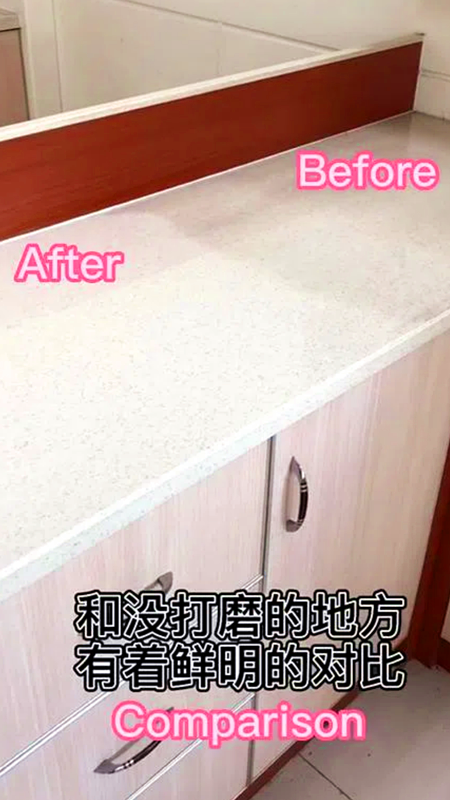
Acrylic solid surface can be sanded. Minor scratches, burns, or stains? Sand them out with fine-grit paper. The material is homogeneous, so the repair is invisible.
Winner for easy fixes: Acrylic solid surface.
Heat Resistance
Quartz handles moderate heat but can crack under sudden temperature changes. A hot pan directly from the oven? Not recommended.
Acrylic solid surface is less heat-resistant. A hot pan will leave a mark—though that mark can be sanded out. Both materials need trivets.
Winner: Tie (with caution for both).
Stain and Chemical Resistance
Both are non-porous, so they resist stains from coffee, wine, and oil. However, quartz is more resistant to strong chemicals like bleach or acetone. Acrylic solid surface can be damaged by harsh solvents.
Winner for chemical resistance: Quartz.
Appearance
Quartz naturally mimics natural stone like marble or granite with speckled or veined patterns.
Acrylic solid surface offers solid, consistent colors and a softer, more modern matte finish. It also allows backlighting for a glowing effect.
Winner: Depends on your style.
Cost
Quartz typically costs more, especially for premium patterns.
Acrylic solid surface is generally more affordable and easier to fabricate, which lowers installation costs.
Winner for budget: Acrylic solid surface.
The Bottom Line
Choose quartz if you love the look of natural stone, need high chemical resistance, and don't mind visible seams or non-repairable surfaces.
Choose acrylic solid surface if you want seamless curves, an integrated sink, easy repairability, and a softer, modern aesthetic—all at a lower price point.
For most homeowners who cook daily and want low-maintenance beauty with repair options, acrylic solid surface is the smarter long-term choice.


