

close
Choose Your Site
Global
Social Media
Views: 0 Author: Site Editor Publish Time: 2026-10-17 Origin: Site


Why Acrylic Solid Surface Can Achieve Seamless Joints: The Craft and Science Explained
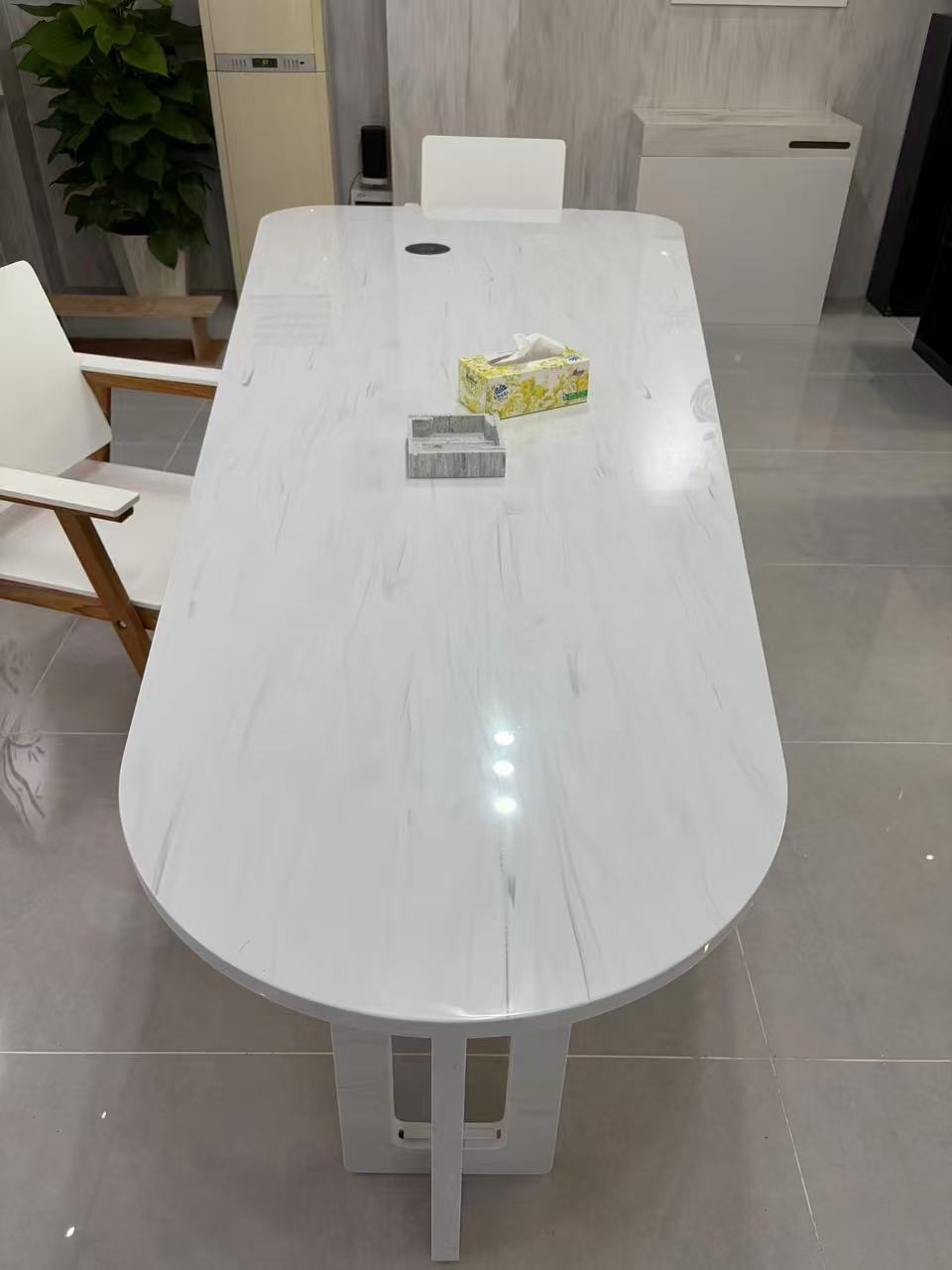
A truly seamless surface is one of the defining advantages of acrylic solid surface — and one of the most misunderstood. Here's how it actually works.
1. Homogeneous Composition
Acrylic solid surface is a through-and-through material: pigment, aluminum filler (ATH), and acrylic resin are mixed evenly throughout the entire thickness. There is no surface layer, no veneer, no printed pattern sitting on top. This means when two pieces are joined and sanded, the exposed edge looks exactly like the face — the color and texture continue uninterrupted.
2. Thermoset Chemistry That Bonds to Itself
The binder is acrylic resin (typically MMA-based), a thermoset polymer. Unlike thermoplastics, it doesn't remelt — but it bonds chemically to fresh acrylic resin. This is the key: the same chemistry that forms the sheet can form a bridge between two sheets.
3. The Joining Process, Step by Step
Preparation: Edges are cut square, cleaned, and dried. Dust and moisture are the enemy of a strong joint.
Color-matched adhesive: A two-part acrylic adhesive is tinted to match the sheet — often using dust from the same material for a near-perfect color blend.
Application and clamping: Adhesive is applied to both edges, the pieces are aligned, and clamped under pressure until fully cured.
Sanding and polishing: The cured joint is sanded flush and polished progressively — coarse to fine — until the seam disappears into the surrounding surface.
4. Why the Joint "Disappears"
Because the adhesive is acrylic-based and color-matched, and because the material is homogeneous, sanding reveals a continuous surface across the joint. There's no visible line of different material — just the same stone-like face, uninterrupted.
5. What Makes or Breaks a Seamless Joint
Accurate edge preparation and tight fit
Correct adhesive color match
Clean, dry, dust-free surfaces
Proper clamping pressure and full cure time
Skilled sanding and polishing
Bottom Line
Seamless joining isn't magic — it's homogeneous material plus compatible acrylic chemistry plus disciplined craft. Done right, the joint is invisible; done poorly, no material can hide it.


